Fed Set for Rate Hike as Trump Demands World’s Lowest Rates
Futures markets are pricing odds above 85% that the Federal Reserve raises interest rates at its September 15-16 meeting, after Friday’s consumer price index report showed core inflation in August rising at its fastest pace in four months…
Khaled Aziz · · Originally published by ontime+
Key Points
- Futures markets price more than 85% odds of a Fed rate hike this week.
- August core inflation posted its largest increase in four months, above forecasts.
- A hike would put Trump's own Fed chair against the White House before midterms.
The latest:
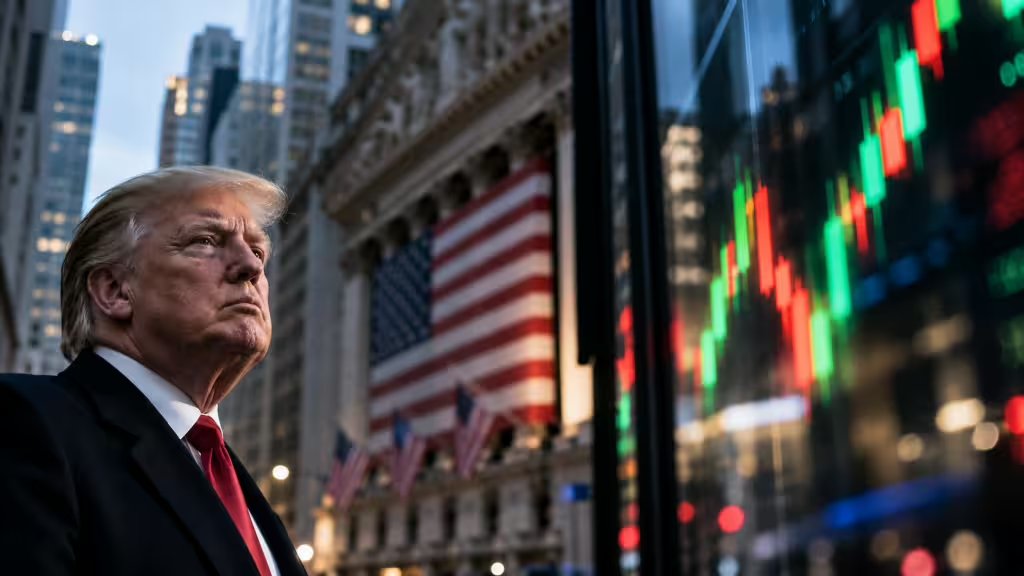
Futures markets are pricing odds above 85% that the Federal Reserve raises interest rates at its September 15-16 meeting, after Friday’s consumer price index report showed core inflation in August rising at its fastest pace in four months and exceeding forecasts. The target range currently stands at 3.5% to 3.75%. Major banks including JPMorgan Chase and TD Bank revised their forecasts to anticipate a hike.
Details:
- The chair: A hike would place Fed Chair Kevin Warsh, chosen by President Donald Trump and sworn in in May 2026, in direct confrontation with the White House he was appointed from. Warsh has not publicly addressed the rate expectations ahead of the meeting.
- Trump’s position: Speaking Sunday from Ireland, where he was attending the Open golf championship, Trump repeated that the United States should pay the lowest interest rate in the world regardless of inflation data, and said he did not know whether the Fed would raise rates.
- The trade threat: Trump renewed a threat he first posted two weeks earlier to halt trade with countries where the United States runs a deficit unless interest rates are lowered. He did not name the countries covered or set a deadline.
- The White House line: National Economic Council Director Kevin Hassett told Fox News on Sunday that Trump would defend Warsh’s independence above all else whatever the decision, while adding the president would not be very happy with a hike. He told Bloomberg on Friday the president would have something to say if rates rose.
- The political clock: The meeting falls weeks before November’s midterm elections. Reuters/Ipsos polling indicates a rate increase could deepen voter anxiety over the cost of living, as Trump’s approval has slipped with tariff-driven inflation persisting and energy prices climbing because of the war with Iran.
- Inside the Fed: Three policymakers voted for a rate increase at the July meeting. The 30-year Treasury yield jumped on July 29, when the Fed held rates unchanged and Warsh did not offer markets a convincing explanation for the decision.
- The economists: Maurice Obstfeld, former IMF chief economist and Peterson Institute fellow, said the Fed is in a no-win position: it either draws the president’s anger or loses market credibility. Heather Long, chief economist at Navy Federal Credit Union, assessed that Warsh cannot win politically now.
- The counterview: Patrick Harker, former president of the Philadelphia Fed, argued a rate increase could actually serve the administration’s goals by cooling inflation expectations and pushing down long-term bond yields.
- The market read: Bloomberg economists said the signal from markets is unambiguous: investors want and expect a hike, and failing to deliver one would cost Warsh his credibility with them.
Between the lines:
The pressure on Warsh runs in both directions and is measurable. Three dissenting votes in July and the 30-year yield jump on July 29 show markets and colleagues already read a hold as weakness. Hassett’s two formulations — defending independence, then warning the president would have something to say — mark the boundary the White House is drawing publicly.
What’s next
The Fed’s decision lands September 16, with Warsh’s news conference the test of how he frames a hike. Watch Trump’s response, long-dated Treasury yields, and whether the dissent count shifts again.