
Huawei Sets 2027 AI Chip Launches in Nvidia Challenge
The latest Huawei will introduce the 960DT in the first quarter of 2027, followed by the Ascend 960PR in the third quarter, rotating chairman David Wang said Thursday. The roadmap places interconnection technology at the center of Huawei’s…
Caroline Haiat · · Originally published by ontime+
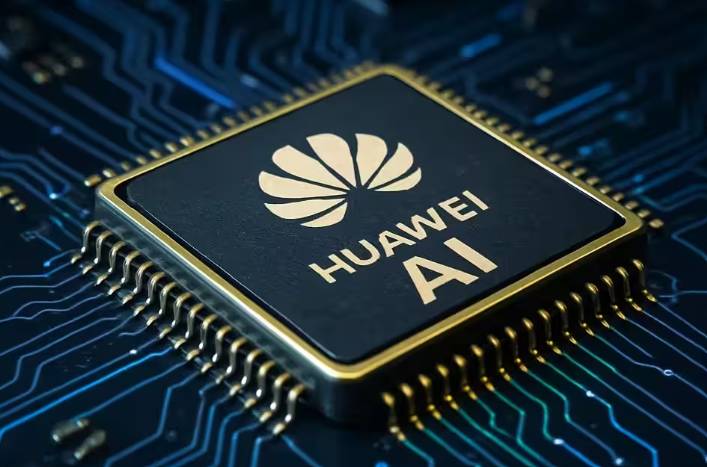
Key Points
- Huawei plans two new AI processors in 2027, expanding its bid to build a domestic alternative to Nvidia.
- Its UnifiedBus architecture connects vast numbers of processors through supernodes and million-chip superclusters.
- The push advances China’s effort to create a self-sufficient AI computing ecosystem amid US export controls.
The latest
Huawei will introduce the 960DT in the first quarter of 2027, followed by the Ascend 960PR in the third quarter, rotating chairman David Wang said Thursday. The roadmap places interconnection technology at the center of Huawei’s response to restrictions limiting Chinese access to advanced AI processors and semiconductor manufacturing equipment. Rather than focusing solely on individual chip performance, the company is building an architecture intended to combine large numbers of processors into coordinated computing systems.
Details
- UnifiedBus design: UnifiedBus is Huawei’s interconnection technology for moving information among processors so they can operate efficiently as one computing system. Wang said the company has developed 11 semiconductors based on the technology for use in its large-scale computing systems. At that scale, rapid data exchange becomes almost as important as individual processor performance because workloads must move efficiently across the system.
- Supercluster capacity: Huawei calls its largest interconnected systems superclusters. Wang said they can support up to one million AI processors, addressing the computing demands of increasingly sophisticated models whose workloads extend beyond the capacity of a single processor.
- Deployment scale: The company has delivered more than 1,000 smaller interconnected systems, known as supernodes, to over 370 customers. Supernodes form another part of Huawei’s strategy to provide computing capacity by coordinating multiple processors within unified systems.
- Developer base: Huawei’s AI chip ecosystem currently has 5,270 active monthly developers, Wang said. Expanding that community is central to building software compatibility and adoption alongside the hardware, networking and computing architecture required to compete across the wider AI technology stack.
- Ecosystem contest: Nvidia’s position rests on more than processor performance. Its hardware, networking technology and CUDA software ecosystem provide researchers and companies with a mature development environment. Moving applications to another architecture carries significant costs for developers already accustomed to Nvidia’s tools and programming environment.
- Export-control impact: US export controls restrict China’s access to certain advanced AI processors and semiconductor manufacturing technologies. The measures have limited Nvidia’s ability to sell its most powerful products in China while encouraging Chinese technology groups to combine larger numbers of domestically available chips for greater computing capacity.
Background
China is pursuing a broader domestic AI supply chain spanning semiconductors, data centers and computing infrastructure. That effort increasingly emphasizes complete systems combining processors, networking and software, rather than individual chips alone. Huawei’s supernode and supercluster strategy follows this system-level approach as Chinese companies seek alternatives to leading foreign technology.
What’s next
Huawei’s next scheduled milestone is the 960DT launch in the first quarter of 2027. The Ascend 960PR is due to follow in the third quarter, providing the next two tests of its expanding AI computing architecture.