
Qatar PM urges joint Gulf action as US-Iran messages pass
Qatar's prime minister said Gulf states must act together to stabilize the region.
· Source: Bloomberg
Summary
- Qatar's prime minister said Gulf states must act together to stabilize the region.
- Messages are moving between Washington and Tehran, with Gulf leaders seeking a Trump meeting.
- Hormuz remains the core issue, with Qatar refusing to build bypass pipelines.
The latest
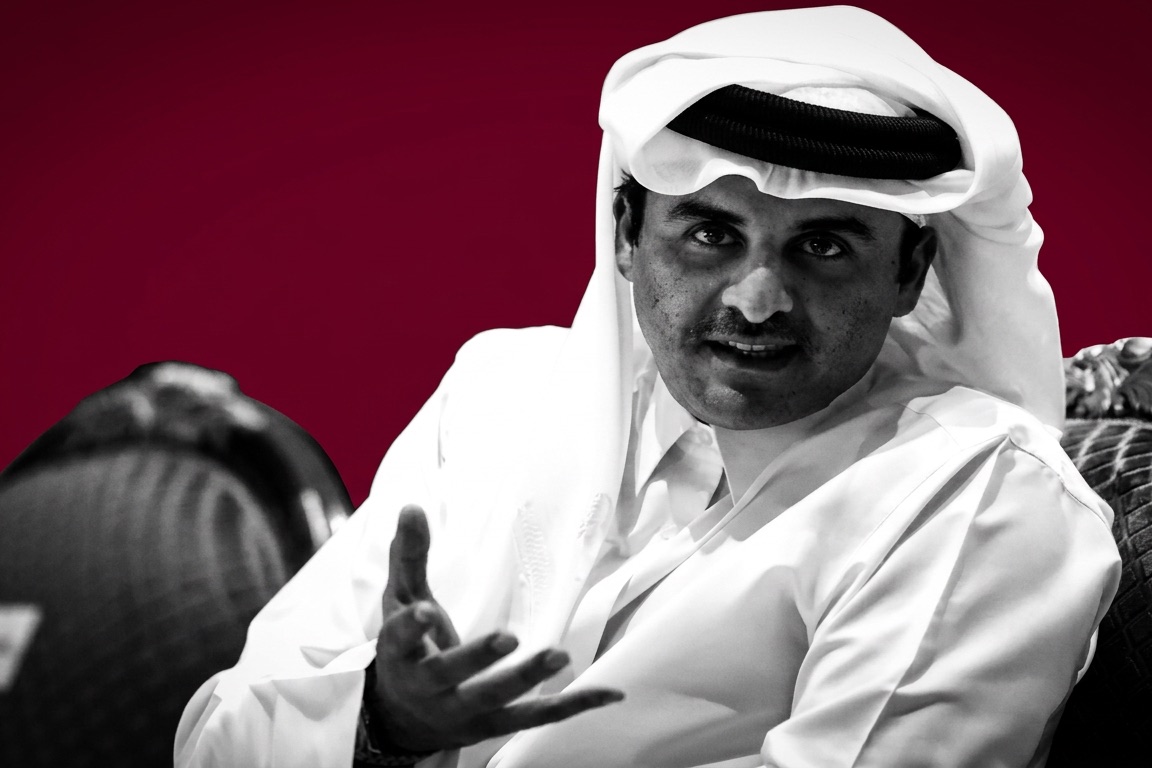
Gulf states have to act together to restore regional stability and help broker a settlement between the United States and Iran, Qatari Prime Minister Sheikh Mohammed bin Abdulrahman Al-Thani said at the Qatar Economic Forum in New York on Sunday. He said messages are being passed between Washington and Tehran. Doha has been one of the main mediators in the conflict.
Details
- The appeal: Al-Thani framed the war as a warning to the entire region, saying Gulf countries have to act together responsibly rather than separately. He did not name any state he considered to be acting alone, and set out no mechanism or timetable for the joint action he called for.
- The mediation: The premier said messages are being passed between the United States and Iran, without identifying the channels or their content. Qatar, like its Gulf neighbors, has come under missile attack from Iran, and has still served as one of the principal mediators in the conflict, according to Bloomberg.
- The UN track: Gulf leaders are aiming to meet President Donald Trump this week on the sidelines of the United Nations General Assembly, as Washington pushes for a resolution to the conflict with Iran that would reopen the Strait of Hormuz for energy exports.
- Trump's opening: Trump told Fox News on Sunday he would probably be open to meeting Iranian President Masoud Pezeshkian, who is expected in New York this week for the UN meeting. No date, venue or agenda for any such encounter has been announced.
- The warning: Speaking to Bloomberg's Mishal Husain, Al-Thani said Gulf countries need to "step up responsibly to stop their saboteurs, stop their troublemakers." He added that ending the US-Iran conflict will require more peacemakers than are currently engaged.
- On the Houthis: The Qatari premier described the escalation by the Houthis as irresponsible. He did not detail which recent actions he was referring to, nor say whether the group featured in the messages Doha is helping to relay between Washington and Tehran.
- The energy line: While some Gulf states seek alternative export routes that bypass the Strait of Hormuz, Qatari Energy Minister Saad Al-Kaabi told the forum that Doha has decided against building gas pipelines, insisting the strait would never become obsolete.
- The backdrop: Al-Thani spoke a day after Saudi Arabia issued air-raid alerts for Riyadh, the first in the capital since the height of the US-Iran war in March and April. The alerts underline that the security risk is not confined to shipping lanes.
Background
Qatar has positioned itself as a standing channel between Washington and Tehran through the US-Iran war, even as Gulf capitals themselves came under missile fire. The Strait of Hormuz, the outlet for much of the region's energy exports, remains the commercial core of the conflict.
Between the lines
Doha's refusal to build bypass pipelines, stated by its energy minister at the same forum, carries a political message alongside the commercial one: Qatar is betting the strait reopens rather than hedging against it staying shut. That bet sits behind the premier's push for collective Gulf action and for more mediators in the file.
What's next
Watch whether Gulf leaders secure their meeting with Trump on the UN General Assembly sidelines this week, and whether any Trump-Pezeshkian encounter materializes in New York.
Source: Bloomberg, Argaam