
Saudi Arabia shifts oil exports back through Hormuz after pipeline halt
SAFAA SUBHI · · Originally published by ontime+
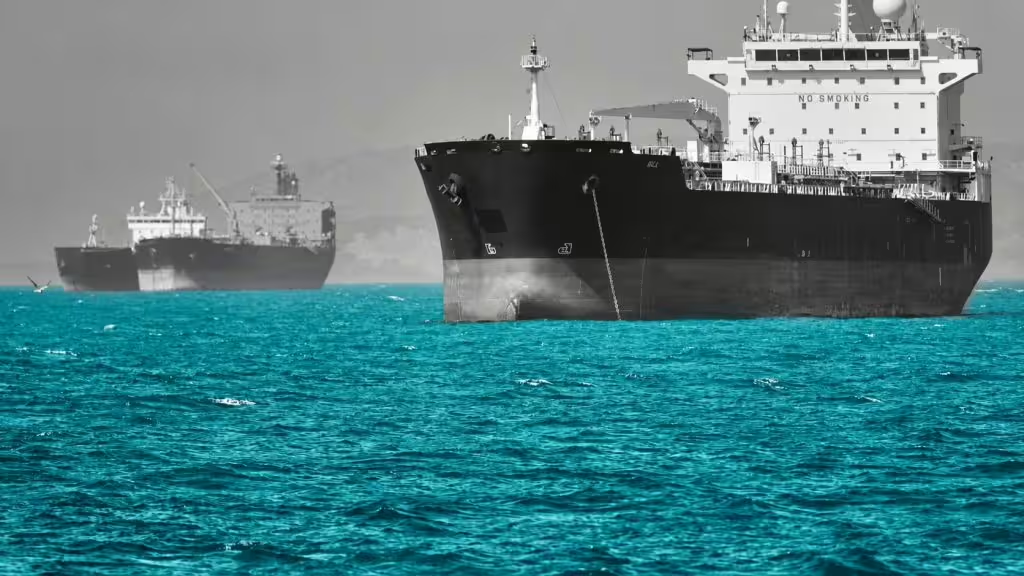
The latest:
Saudi Arabia is stepping up spot crude sales loading from outside the Strait of Hormuz after the shutdown of its East-West pipeline cut flows to the Red Sea coast, Bloomberg reported. Aramco sold roughly 20 million barrels to Asian refiners this week, according to traders familiar with the matter who asked not to be identified. Aramco declined to comment.
Details:
- The buyers: Traders said purchasers included state-owned and independent Chinese refiners, alongside other East Asian importers. The cargoes are available for loading this month and next, from a zone lying immediately outside the Strait of Hormuz, according to the same traders, who spoke on condition of anonymity.
- The mechanics: The cargoes are designated for ship-to-ship loading in the Gulf of Oman during September and October, traders said. The crude still has to transit Hormuz, but because of where loading takes place, buyers do not carry responsibility for that leg of the voyage.
- The pipeline: The East-West line was the main link allowing Saudi Arabia to bypass disruption in the Strait of Hormuz caused by the war with Iran. It was shut last week after at least two points along its route were struck, and no official announcement has been made on when operations resume.
- Europe first hit: After the halt, Aramco had already postponed deliveries to some European customers from the Red Sea port of Yanbu, at the western end of the line, Bloomberg reported. Asian refiners separately asked the state energy company for details on their upcoming shipments from there.
- The volumes: Tanker Trackers said total Saudi exports from the Arabian Gulf and the Red Sea jumped 77% in the two weeks preceding the attack on the pipeline. It added that for the first time in two months, combined Gulf exports through Hormuz, of which Saudi crude is the largest share, exceeded 10 million barrels per day.
- The naval factor: Tanker Trackers, which tracks vessels and oil shipments, said on X that Aramco is prepared to move large volumes through Hormuz because the US Navy is positioned to provide better protection. The firm said the eastward shift began weeks before the pipeline was struck.
- Washington’s read: US Energy Secretary Chris Wright told Bloomberg Television he expects the pipeline back in service soon, saying operators had conducted a careful assessment of the damage. “I think you’re going to see the pipeline come back online soon,” he said, adding that more clarity would emerge shortly.
- On the water: Even before last week’s attacks, loading rates were climbing gradually, and a fleet of more than a dozen Saudi tankers began waiting just off Hormuz in recent weeks, Bloomberg reported. Satellite imagery shows more tankers loading at a major Saudi Gulf export terminal in the past few days.
- Official silence: Aramco declined to comment on the spot sales and the export shift. The energy ministry said it had nothing to add to its statement issued Friday, according to Bloomberg, and no timeline has been published for restarting the pipeline.
- The market: Bloomberg reported that Saudi Arabia raised exports through Hormuz during the first ten days of September compared with the previous month and is seeking to increase those volumes further. The halted line threatens millions of barrels a day with crude trading near $110 in London.
Background:
The East-West pipeline runs from Saudi Arabia’s eastern oil fields to Yanbu on the Red Sea, giving the kingdom an export route that avoids the Strait of Hormuz entirely. Its shutdown removes the main insurance policy against disruption in the strait.
Between the lines:
Two shifts are stacked here. Tanker Trackers dates the move east to improved US naval protection weeks before the strike, meaning the pipeline halt accelerated a trend rather than starting it. The ship-to-ship structure in the Gulf of Oman also shifts Hormuz transit risk away from Asian buyers, which helps explain why 20 million barrels cleared in a single week.
What’s next
Watch for an official restart date for the East-West line, Aramco’s October loading program for European customers at Yanbu, and whether Gulf exports through Hormuz hold above 10 million barrels per day.