
Trump Declines Saudi Request For Strikes On Houthis
Washington has resisted Saudi calls for military action against the Houthis after the group captured the Red Sea port of Mokha and fired missiles and drones at the kingdom, offering intelligence support instead of strikes, according to…
Ahmed Kawah · · Originally published by ontime+
Key Points
- Trump declined Saudi requests for strikes on the Houthis after the group seized Mokha, offering intelligence instead.
- Houthi missiles and drones hit Saudi Arabia as fighters advanced toward the Bab Al Mandeb shipping route.
- Washington's refusal exposes Gulf limits on influencing US decisions during a war it did not start.
The latest:
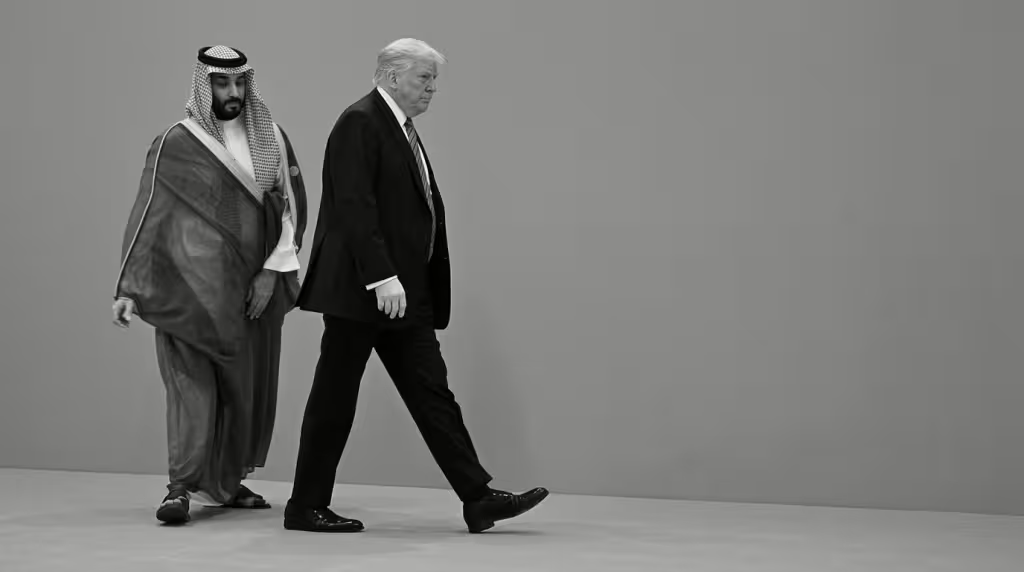
Washington has resisted Saudi calls for military action against the Houthis after the group captured the Red Sea port of Mokha and fired missiles and drones at the kingdom, offering intelligence support instead of strikes, according to reports. Crown Prince Mohammed bin Salman pressed President Donald Trump to intervene. Trump said the Houthis had contacted Washington and did not want a fight with the United States.
Details:
- The Saudi request: Crown Prince Mohammed bin Salman urged Trump to strike the Iran-backed group after its advance and its missile and drone launches at Saudi territory, according to reports. Trump declined, and Washington offered intelligence support instead. No timeline or conditions for any change in that position have been announced.
- Trump’s framing: The president said the Houthis had called Washington, did not want to fight the United States and would prefer no American involvement. He described the Crown Prince as a good friend and predicted the situation would work out well, without saying what US action would follow further escalation.
- The White House line: Vice President JD Vance said the administration was in constant contact with Saudi Arabia, the UAE and other regional partners while holding direct conversations with the Houthis. He said Washington felt on top of a fluid situation and intended to keep monitoring it, without describing any intervention under consideration.
- The strategic gain: Mokha, on Yemen’s western coast, brings the Houthis closer to the Bab Al Mandeb strait linking the Red Sea and the Gulf of Aden. The waterway has gained importance as traffic through the Strait of Hormuz has been severely disrupted, leaving few major routes connecting the Gulf to the Red Sea.
- The wider war: Trump launched the conflict with Iran alongside Israel on February 28, initially saying it would last a few weeks and aimed at regime change in Tehran. More than six months on, reopening the Strait of Hormuz — once carrying a fifth of global energy supplies — has become a central US objective.
- The domestic pressure: Higher energy prices are adding to the cost of living for Americans before November’s midterm elections, and the administration has been reluctant to open a second military front while forces remain focused on Iran and Hormuz.
- Signs of strain: The US launched the war without prior consultation with Gulf states, leaving them to absorb the economic and security consequences. Washington has also made a civilian nuclear pact with Riyadh conditional on the kingdom establishing official ties with Israel.
- A reassurance gesture: Trump nominated a new ambassador to Saudi Arabia on Monday, filling a post vacant for more than a year and a half. The administration has still not named ambassadors to the UAE, Qatar or Kuwait.
- The official position: A senior US administration official said Washington remained focused on core national security interests, including freedom of navigation in the Red Sea, and on empowering regional partners, citing continuous dialogue with Saudi Arabia and the Yemeni government on regional stability.
- The warning: The administration has warned the Houthis against resuming attacks on shipping, saying the United States would take “necessary action” to protect freedom of navigation and its commercial vessels.
Background:
The Houthis seized Mokha last week, extending their control along Yemen’s Red Sea coast. Trump’s first foreign trip after returning to office took him to Saudi Arabia, Qatar and the UAE, a relationship he has repeatedly highlighted.
Between the lines:
Alex Vatanka of the Middle East Institute assessed that Gulf states are rightly angry at becoming victims of a war not of their making, see no solutions from Washington, and are adjusting to a war of attrition in which they are among the biggest losers. The pattern traced above — no consultation before the war, a nuclear pact tied to Israel ties, unfilled ambassadorships — supports that reading of limited Gulf leverage.
What’s next
Watch whether the Houthis resume attacks on shipping and how Washington responds, whether Saudi Arabia renews its request for strikes, and the Senate’s handling of the new ambassadorial nomination before November’s midterms.