
US ran covert four-month mine-clearing operation in Strait of Hormuz
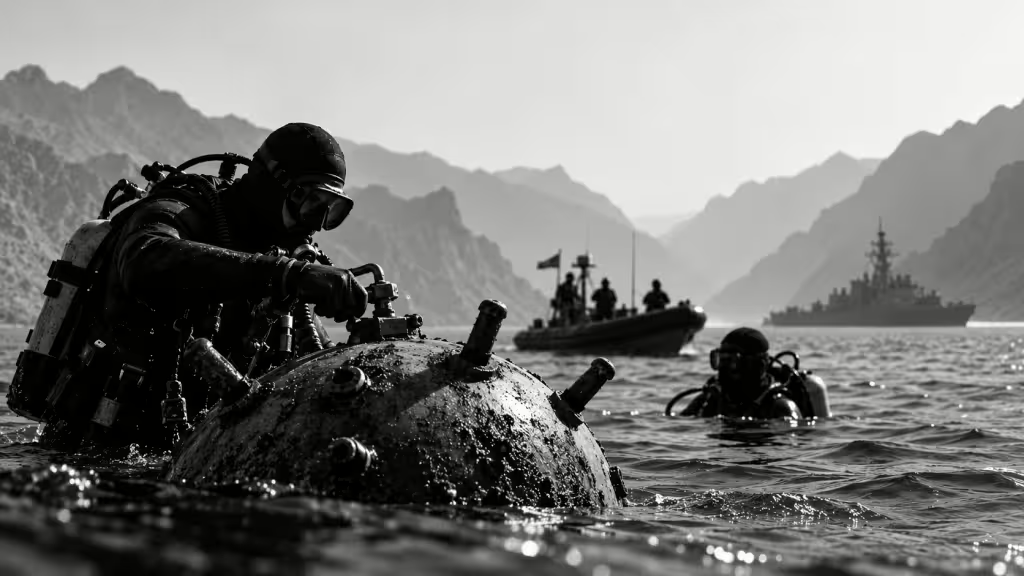
US Navy SEAL divers, uncrewed surface vessels and specialized underwater craft worked mostly at night to clear mines from the Strait of Hormuz over four months, the Financial Times reported, citing people familiar with the operation. It…
Nada Salam · · Originally published by ontime+
Key Points
- US Navy SEAL divers and robot boats cleared mines in Hormuz over four months, FT reported.
- The IMO said in June roughly 80 mines were placed in vital shipping lanes.
- Insurers now quote up to ten times pre-war rates, near $10 million per supertanker.
The latest:
US Navy SEAL divers, uncrewed surface vessels and specialized underwater craft worked mostly at night to clear mines from the Strait of Hormuz over four months, the Financial Times reported, citing people familiar with the operation. It ran alongside the exchange of strikes with Iran. President Donald Trump said last week that all mines in the strait’s international waters had been removed or destroyed.
Details:
- The method: US teams deployed uncrewed surface vessels towing sonar arrays to locate mines on the seabed, according to the Financial Times. Navy divers then approached in small inflatable-hulled craft to place charges and destroy them, the riskiest and most time-consuming stage of the operation.
- The force: A retired US Navy captain described the divers to the Financial Times as “a very small, lightweight kind of force” handling the most dangerous phase. The operation relied on night work and remained undisclosed while it was under way.
- The scale: The International Maritime Organization said in June that roughly 80 mines had been placed in vital shipping lanes. Iran has claimed since the war began that it laid mines in both international and Omani waters inside the strait.
- The dispute: The US military confirmed Trump’s account that the international waters were clear. Iran’s government dismissed the US claims. Shipowners and security advisers said they believed the southern route near Oman’s coast had genuinely been cleared, while doubting the entire strait was mine-free.
- Iranian claims: Iranian media claimed at least two tankers struck mines in the past week and that Tehran had laid additional mines near Oman. Analysts said satellite imagery has not corroborated those claims, and the only confirmed mine sighting in the strait dated to May.
- Insurance costs: Even the threat of mines pushed insurers to quote cover at up to ten times the pre-war cost, roughly $10 million for a typical supertanker. Only a trickle of commercial vessels has been crossing the strait since the war began.
- Oil prices: Crude fell about 5% in the week after Trump’s demining announcement, then more than recovered those losses as strikes resumed, according to the Financial Times.
- The choice: Ships face two options: request passage permission from Iran’s newly declared Persian Gulf Strait Authority, angering Washington and risking US sanctions, or take the Oman-hugging route the US says is clear.
Background:
The Strait of Hormuz handled roughly a fifth of the world’s oil trade before the war, according to the Financial Times. Iran declared a Persian Gulf Strait Authority after hostilities began, requiring vessels to seek its permission to transit.
Between the lines:
Analysts told the Financial Times that Iran’s strongest remaining leverage is uncertainty rather than mines. With satellite imagery not backing Tehran’s latest claims and only one confirmed sighting since May, the disputed threat still shapes insurance pricing and traffic volumes. Shipowners’ partial confidence in the Oman route, alongside doubt about the wider strait, illustrates how far unverifiable risk moves markets.
What’s next
Watch whether commercial traffic and insurance quotes normalize after the US clearance claim, whether Iranian mine allegations near Oman gain independent corroboration, and how oil prices track renewed strikes.
Source: