
Zamir Leads Secret Israel-Saudi Push Against Houthis
SAFAA SUBHI · · Originally published by ontime+
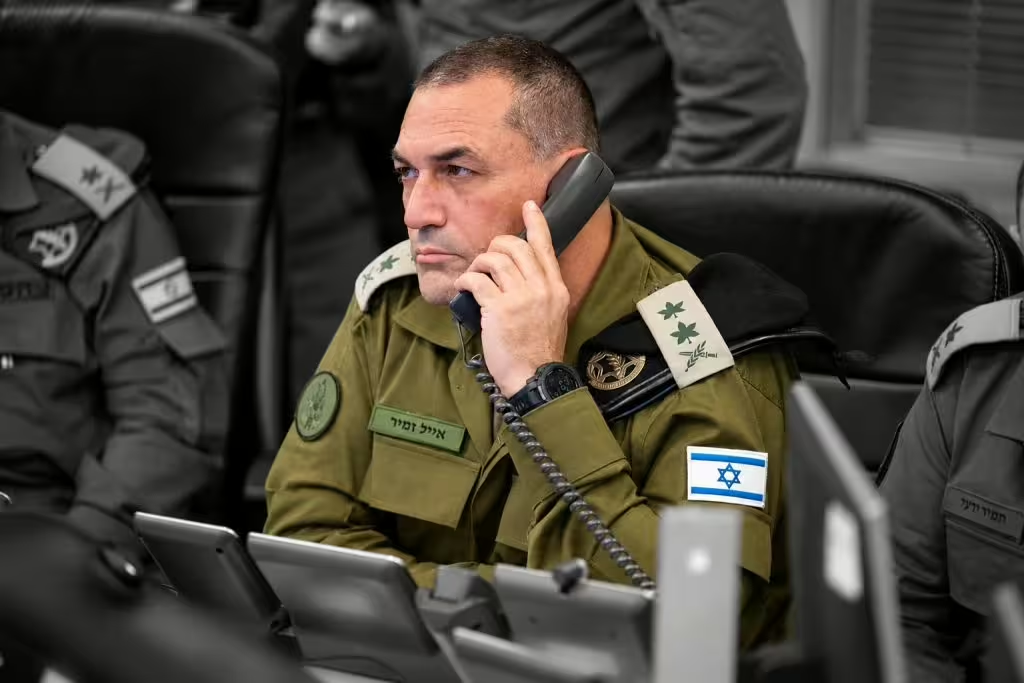
The latest:
Senior military commanders from eight countries, including Israel and seven Arab states, gathered at an isolated military site in Germany last week for a closed conference organized by CENTCOM commander Admiral Brad Cooper, Israeli officials told Axios. None of the participating governments announced the meeting. CENTCOM confirmed it hosted the gathering, saying the commanders discussed opportunities to strengthen security cooperation in the Middle East.
Details:
- Who attended: Alongside Zamir and Cooper, the chiefs of staff of Saudi Arabia, the United Arab Emirates, Bahrain, Kuwait, Qatar, Jordan and Egypt took part, according to Axios and Maariv. Several of those states have no diplomatic relations with Israel, making the shared room itself the most unusual element.
- The first since the war: Similar meetings have been held before, but Israeli officials said this was the first time Zamir, Cooper and the Arab chiefs of staff have sat together since the war with Iran began more than six months ago.
- CENTCOM’s statement: Spokesman Captain Tim Hawkins said: “Last week we hosted military leaders from eight countries at a planned conference in Germany. The leaders discussed opportunities to strengthen security cooperation in the Middle East.” A separate CENTCOM source gave the Jerusalem Post the same account.
- What Cooper told them: Cooper assured the regional chiefs that Washington does not intend to withdraw forces from the Middle East despite Iranian attacks on American bases, Axios reported, and briefed them on a US plan to widen the shipping corridor through the Strait of Hormuz.
- Zamir’s briefing: Israeli officials told Axios that Zamir briefed the Arab participants on Israeli military activity across its fronts. Maariv reported that the open exchange of military intelligence could point to deepening ties between Israel and Gulf states along the lines of the Abraham Accords.
- The Saudi track: A source said Israel and Saudi Arabia are holding talks, facilitated by CENTCOM, on how Israel could support Saudi operations against the Houthis, providing intelligence, surveillance and reconnaissance assistance rather than striking Yemen directly.
- The UAE precedent: Israeli officials have previously disclosed that Israel deployed an Iron Dome air-defense system in the UAE, along with personnel to help operate it, and supplied real-time intelligence, surveillance and reconnaissance support during the war with Iran.
- Houthi pressure: The meeting took place as the Houthis escalated attacks on Saudi cities and energy infrastructure and advanced along Yemen’s Red Sea coast toward Bab al-Mandab. Thirteen civilians were wounded Monday in strikes on Khamis Mushait, Abha and Taif, Reuters reported.
- The oil risk: Saudi Arabia blamed an Iran-aligned, Iraq-based group for Friday’s attack that shut the 1,200-kilometer East-West pipeline linking Gulf oilfields to the Red Sea. Traders said a prolonged closure could remove up to 4% of global oil supply. Riyadh has not said when operations resume.
- Command structure: Maariv noted that after the Abraham Accords were signed in September 2020, Israel was moved from European Command to CENTCOM’s area of responsibility, allowing military cooperation with Arab states under the CENTCOM umbrella, including air and missile defense.
Background:
A comparable gathering took place in March 2022, when then-Israeli chief of staff Aviv Kohavi met senior Arab commanders in Sharm el-Sheikh, including Saudi chief of staff Fayyad al-Ruwaili, to discuss escalating Iranian threats.
Between the lines:
Maariv assessed that if Israeli-Saudi cooperation develops, it could open a path to normalization after the war and Israel’s elections. That reading rests on facts already established: Riyadh’s exposure to Houthi strikes, the closed pipeline, and the UAE precedent showing Israeli defensive aid delivered to a Gulf partner under CENTCOM’s umbrella.
What’s next
Watch whether the Israeli-Saudi intelligence-sharing talks produce anything operational, when Riyadh restarts the East-West pipeline, and whether CENTCOM convenes another multinational chiefs-of-staff session.